Mobile App Modernization Services

AppVerticals modernizes mobile apps that have fallen behind their platforms. We audit the codebase, dependencies and store compliance status, then tell you whether the app needs a refactor, a framework migration or a rebuild. Most apps we assess need less than the previous estimate suggested, and the work ships inside the listing you already own.

  • Keep your users, ratings and reviews through the migration
  • Clear store compliance warnings and ship updates again
  • Move off deprecated frameworks without a full rewrite
  • Get features shipping on a normal release cadence
Calculate Your App Cost
Mobile App Modernization Services

A decade of shipping to both stores, measured four ways.

250 +

Apps taken through store submission

1M +

Downloads on apps we built

96 %

First-submission App Store approval rate

10 +

Years of Apple and Google platform engineering

Mobile app modernization updates an existing published app so it meets current platform requirements, ships features faster and runs on a framework your team can hire for. The work ranges from raising the target API level to migrating Objective-C to Swift or Java to Kotlin, sometimes rebuilding the client under the same store listing. Legacy mobile app modernization differs from a new build in one way: the app already has users, a rating average and on-device data, and all three have to survive it. AppVerticals delivers modernization alongside our custom mobile app development services, so the engineers assessing the app are the ones who change it. Where the constraint sits server-side, that work belongs to our legacy software modernization practice.

When a Mobile App Needs Modernization

Six conditions account for most of the modernization work we take on. Which one applies changes where the audit starts and how urgent the first release is. The first condition sets a deadline someone else controls. The rest set a cost that compounds quietly. Both are worth auditing before the next release cycle rather than during it.

A store compliance warning has appeared

Play Console or App Store Connect is blocking updates until a target level or toolchain requirement is met.

An OS release broke something

A feature that worked last year stopped working after a platform update, and the fix depends on APIs the codebase cannot reach.

The framework is deprecated

Objective-C, Java, Xamarin or an abandoned cross-platform tool, with a shrinking pool of developers who will work on it.

Small features take months

Every change touches everything, regression risk is high, and estimates have stopped resembling the work.

Ratings are falling on crashes

Crash-free session rate has drifted and reviewed text names of specific devices or OS versions.

Nobody left understands the codebase

The original team has gone, documentation is thin, and each change is made cautiously because the blast radius is unknown.

Mobile App Modernization Solutions We Provide

The audit determines which of these apply. An app blocked on a target API level may need one of them. An app on a dead framework with no tests usually needs five.

Mobile App Modernization Audit

Every engagement opens here, including the ones that end with a recommendation to change very little. The audit is scoped and delivered as standalone work, so the findings are yours whatever you decide next.

Key Benefits & Outcomes

  • A codebase assessment covering structure, dependencies, tests and crash data
  • Store compliance status against current Apple and Google requirements
  • A refactor-or-rebuild recommendation with the reasoning attached
  • A phased plan with each release scoped and estimated

Technologies & Process

We review the codebase, dependency tree, build configuration, crash reporting and store console alongside the current release history. Static analysis finds the measurable debt. Engineer review finds the structural debt, which is usually what determines the answer. Third-party SDKs are checked for maintenance status and privacy manifest coverage, because an abandoned dependency frequently blocks a platform upgrade on its own. You receive the assessment, compliance status, recommendation and phased plan as documents rather than a presentation.

Find Out Whether You Need a Refactor or a Rebuild

Give us read access to the repository and your store console. Within five business days you receive a codebase assessment, your compliance status against both stores, a direct recommendation on refactor or rebuild with the reasoning attached, and a phased plan with each release estimated. If the answer is that two modules need work and the rest is fine, that is what the document will say.

Refactor, Rebuild or Replatform Your Mobile App

Seven paths, ordered by how much of the app changes. Most engagements use more than one, applied to different parts of the codebase. A rebuild is the right answer less often than it is quoted. Most apps arriving here after a rebuild estimate need compliance work plus refactoring on two or three modules. We publish this matrix because the incentive in this category runs the other way, and a buyer comparing providers should be able to see where each one lands on it.

Path Change Best fit Primary tradeoff
Maintain None An app meeting requirements with no feature roadmap Compliance debt accrues on the platform calendar
Comply Minimal Blocked updates from a target level or toolchain gap Fixes the block, leaves the underlying debt
Refactor Low to medium Slow feature delivery and high regression risk No visible change, which makes it hard to fund
Modularize Medium Multiple teams blocked on one codebase Upfront cost before any delivery speed appears
Migrate language Medium to high Deprecated language with a shrinking hiring pool Runs over multiple releases alongside feature work
Replatform High Abandoned framework, or two native apps one team cannot sustain Platform-specific capability may be lost
Rebuild client Very high Architecture that blocks every meaningful change Highest cost and the greatest risk to users and data

iOS and Android Modernize on Separate Tracks

The two platforms deprecate on different schedules, enforce different requirements and offer different migration paths. An app behind on both needs two plans running in parallel.

iOS app modernization

iOS app modernization

Apple moves the toolchain requirement annually and enforces it at submission rather than at review, so a blocked build is discovered at the worst moment. Objective-C to Swift migration is the most common request, and Swift and Objective-C coexisting in one target is what makes it possible to do incrementally.

  • Objective-C migrated to Swift module by module through the bridging layer
  • Builds moved to the required Xcode and SDK generation
  • Privacy manifests completed for your code and your dependencies
  • UIKit screens migrated to SwiftUI where the surface justifies it
  • Cold start and frame timing profiled through Instruments on real hardware

Modernized iOS apps still need the same release discipline as new ones. Our iOS app development services cover submission, review readiness and post-release monitoring on the same engagement.

Android app modernization

Android app modernization

Google Play raises the required target API level every year and enforces it against anything you publish. Java to Kotlin migration is the common language path, and Gradle module separation is usually what actually fixes build times.

  • Target API level raised to the current Play requirement
  • Java migrated to Kotlin with interoperability maintained throughout
  • Gradle modules separated with clear API boundaries
  • View-based screens migrated to Jetpack Compose where it fits
  • Android vitals monitored as an acquisition input rather than a QA metric

Android fragmentation makes the device matrix a real decision rather than a default. Our Android app development services test against the OS versions and devices your install base actually runs.

Store Requirements Are the One Deadline You Do Not Control

Apple and Google publish their requirements well in advance, so nothing here is hidden. The failure mode is that nobody is assigned to read them. Missing one does not remove your app, but it stops you shipping updates, which turns a routine security fix into a compliance project. Requirements verified against the Google Play target API level page and the Apple Developer Upcoming Requirements page on 16 September 2026. Both platforms change these several times a year. Confirm against the official pages before planning a release.

Store Requirement Date
Google Play New apps and updates must target Android 16 (API 36) 31 August 2026
Google Play Existing apps must target Android 15 (API 35) to stay available to new users on newer devices 31 August 2026
Google Play Extension window, requested through Play Console to 1 November 2026
Google Play Separate levels apply to Wear OS, Android TV, Automotive and XR Varies
App Store Builds must use Xcode 26 and the SDK 26 generation 28 April 2026
App Store Privacy manifest and required reason API declarations since 1 May 2024
App Store Updated age rating information 31 January 2026
App Store Digital Services Act trader status for EU distribution since 17 February 2025

Stage one. The app stays shippable at every point

Work is sequenced so a release can go out at the end of any week. Modernization programs that require a freeze tend to lose support around month four, when the business needs a feature and the answer is that the app cannot ship. Keeping it releasable costs some efficiency in sequencing and is the difference between a program that completes and one that gets cancelled with the codebase half-migrated, which is worse than either starting point. Deliverable: a release plan where every phase ends in a shippable build.

Stage two. The listing never changes

Users, ratings, reviews and install base stay with the app because the work ships into the existing listing rather than a new one. Where a rebuild is genuinely needed, the new client replaces the old inside the same app record, with on-device data migrated through versioned steps and a rollback path. A rebuild that ships as a second listing starts from zero on every store signal that took years to earn. Deliverable: migration plan covering on-device data, authentication state and store continuity.

Stage three. Tests are written before the code moves

Characterization tests capture what the code currently does, including the behavior nobody intended and the edge cases users depend on. Legacy apps rarely have meaningful coverage, which is why migrations regress in ways nobody predicted. Writing tests first is slower at the start and is the only reliable way to prove a modernized module still behaves as it did. Deliverable: characterization test suite covering each module before migration begins.

Your Users, Ratings and Data Survive the Work

An app that has been live for years carries assets that cannot be rebuilt: a rating average, review history, install base and data sitting on devices. Three positions govern how we protect them.

01

The work ships into the listing you already own

Every release goes out through the existing app record on both stores. Rating average, review history, install base and keyword ranking carry forward because nothing about the listing identity changes. This holds even when the client is rebuilt from scratch, which is a technical decision rather than a store one.

02

On-device data migrates with versioned steps and a rollback path

Local storage migrations are unrecoverable once they run on a user device, which makes them the highest-consequence work in a mobile modernization. Migrations are written as versioned steps, tested against production-shaped data at realistic volumes, and given a rollback path. Authentication state and stored credentials are handled explicitly so users are not silently logged out of an app they have been signed into for years.

03

Releases go out progressively and can be halted

Modernized releases ship through phased rollout on Google Play and staged release on the App Store, starting at a small percentage with crash-free rate and rating movement watched against the pre-release baseline. Thresholds for halting are agreed before the rollout opens, so stopping is a number being crossed rather than a judgment call.

Store continuity

Same app record, same ratings, same reviews, same install base throughout the program.

Data integrity

Versioned local migrations tested against production-shaped data with a rollback path.

Progressive rollout

Phased and staged release with agreed halt thresholds on crash rate and ratings.

Account ownership

Your App Store Connect and Play Console accounts, your signing keys, your repository. Full handover at any point.

Get the migration plan before you commit to the work.

The Target Follows the App, Not a House Standard

What an app should be modernized to depends on what it does, who maintains it and how long it needs to last. Everything below is selected against a specific constraint, and anything that cannot be tied to one stays out.

Swift, SwiftUI, UIKit, Objective-C interoperability, Swift Package Manager, Xcode, Instruments

Mobile App Modernization Cost

How much does mobile app modernization cost? Cost is set by the state of the codebase rather than the size of the app. The variables are existing test coverage, how many third-party dependencies are unmaintained, whether the app runs on one platform or two, how much of the interface is being touched, and whether local data structures change. Test coverage moves the number more than anything else, because a codebase with no tests has to have them written before anything can safely move. For a comparison against building new, our app development cost calculator returns a starting range in a few minutes.

Scope Typical work Timeline Investment
Compliance and SDK upgrade Target level raised, toolchain updated, dependencies resolved, full regression test 2 to 5 weeks $8,000 – $20,000
Targeted refactor Two or three modules restructured with test coverage added 6 to 12 weeks $20,000 – $45,000
Language migration Objective-C to Swift or Java to Kotlin, incremental across releases 3 to 8 months $50,000 – $120,000
Replatform or client rebuild New client in the same listing, data migrated, backend contracts preserved 4 to 9 months $80,000 – $180,000

Mobile App Modernization Timeline

How long does mobile app modernization take? A compliance and SDK upgrade takes two to five weeks depending on how many dependencies have to be replaced. A targeted refactor runs six to twelve weeks. Language migration runs three to eight months and ships continuously rather than landing on a date. A client rebuild runs four to nine months. The audit itself takes five business days and is what turns these ranges into a plan.

Quick response

Under 1 hour

First reply in US business hours. The opening question is which platforms and whether updates are currently blocked, because a live compliance block changes the sequencing.

Explore Our Mobile QA Process
First release live

2 to 5 weeks

For apps blocked on compliance, the first shipped release clears the block. Everything else follows on a normal cadence. The most common cause of delay is missing test coverage, because coverage has to be written before anything can safely move.

Meet Our QA Team

Mobile App Modernization by Industry

Industry decides what the app cannot afford to lose during the work. That constraint shapes the rollout plan more than the technology target does.

  • Protected data on the device makes local storage migration the highest-consequence step in the program, and audit logging cannot lapse during a phased rollout. Compliance scope is established during the audit so it shapes the release plan rather than surfacing in review. The same constraints govern our healthcare app development practice.

  • Agents work in the field on older devices held for years, so the supported device matrix runs wider than the analytics-driven default. Offline behavior and cached listing data have to survive migration intact. Device decisions follow the same logic as our real estate app development practice.

  • Driver apps run continuously across shifts, which leaves no natural release window. Offline queuing and sync conflict handling are the two areas where a modernization regression becomes an operational incident rather than a bug report. Rollout planning draws on our logistics app development practice.

  • Demand peaks at term start and freezes are expected outside it, which makes scheduling easier here than anywhere else and makes missing the window costly. Kids Category and Families policy requirements are checked as part of the compliance audit. Delivery follows the patterns established in our education app development practice.

  • Stored credentials, biometric enrolment and certificate pinning all have to carry through a migration without silently logging users out. Rollout halt thresholds are set tighter here than in any other category we work in. Security decisions are made alongside our fintech app development practice.

  • Checkout is where a modernization regression costs money the same day, so it ships behind the most conservative rollout percentage on the plan. Seasonal peaks define a hard freeze window the program has to respect. Checkout work connects to our ecommerce app development practice.

Three Ways to Run a Modernization

Which fits depends on how well the problem is understood. An unresolved refactor-or-rebuild argument starts with an audit. A known scope goes fixed. An app needing continuous work needs a retained team.

Model
Best For
What You Get
Terms
Model
Modernization Audit
DIAGNOSTIC
Best For

An unresolved argument about refactor versus rebuild, or a second opinion on a quote.

What You Get

Codebase assessment

Compliance status on both stores
Refactor-or-rebuild recommendation
Phased plan with each release estimated
Dependency and SDK risk list

Terms
One-time
Five business days
Model
Fixed Scope
DEFINED DELIVERY
Best For

A known piece of work such as clearing a compliance block or migrating a module.

What You Get

Agreed deliverables and acceptance criteria

Predictable cost and schedule
Rollout plan with halt thresholds
Handover documentation

Terms
Fixed fee
Milestone-based
Model
Dedicated Team
RETAINED CAPACITY
Best For

Language migration or continuous modernization alongside feature delivery.

What You Get

Retained mobile engineers

Modernization running alongside your roadmap
Working inside your tooling and process
Quarterly platform requirement review included

Terms
Monthly
team rate
minimum
3-month

Bring Your Crash Dashboard to the First Call

Thirty minutes with a mobile engineering lead. Bring your crash-free session rate, your current target API level and whatever the last team told you about the codebase, even if you suspect it was wrong. You leave the call with a view on whether this is a refactor or a rebuild. The written audit follows within five business days, NDA first.

Apps and Platforms We Rebuilt Without Starting Over

Three programs where the constraint was the platform rather than the product.

LEGACY PLATFORM REBUILD / HOME SERVICES

A Resident App and Four Portals Rebuilt on New Infrastructure

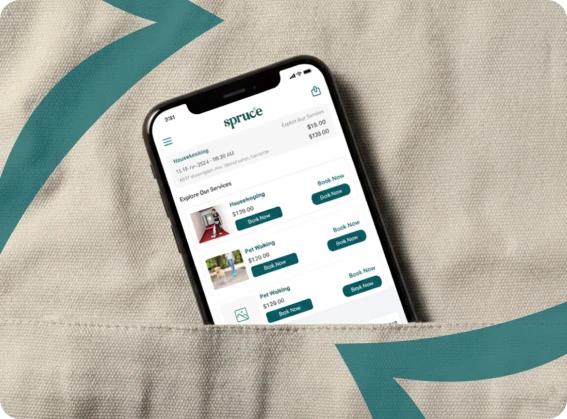
Spruce already ran a multi-platform system including a resident mobile app and separate web portals for admins, service providers and property managers. The legacy infrastructure was the constraint rather than the product. The platform was rebuilt with new modules and streamlined workflows across five distinct user roles.

685K+ customers on the rebuilt platform
7,581 property management companies with live operational visibility
6,477 properties covered across US markets
Read case study

Six Standards We Hold on Every Modernization

Vendor and client incentives genuinely diverge on scope in this category, since a rebuild is worth more than a refactor. These six commitments exist to close that gap, and they are worth asking any provider to match.

The app stays shippable at every point

01

The app stays shippable at every point

Work is sequenced so a release can go out at the end of any week. No modernization freeze, because a program that blocks the product roadmap gets cancelled halfway through, which is worse than either starting point.

We do not default to a rebuild

02

We do not default to a rebuild

Most apps arriving after a rebuild quote need compliance work plus refactoring on two or three modules. A provider that recommends a rebuild every time is describing its commercial model rather than your codebase.

Your listing, ratings and install base carry forward

03

Your listing, ratings and install base carry forward

Every release ships into the app record you already own, including when the client is rebuilt from scratch. A rebuild launched as a second listing throws away every store signal the app spent years earning.

Tests come before migration

04

Tests come before migration

Characterization tests capture current behavior before any module moves. Slower at the start, and the only reliable way to prove a modernized module still does what it did.

Rollout thresholds are agreed before release

05

Rollout thresholds are agreed before release

Phased and staged rollout with halt conditions on crash-free rate and rating movement set in advance, so stopping is a threshold being crossed rather than a judgment under pressure.

You own the accounts, keys and code

06

You own the accounts, keys and code

App Store Connect, Play Console, signing keys and repositories stay in your name from the first sprint. The goal is your team shipping without depending on us.

Frequently Asked Questions

Expert Insights

Background reading on platform requirements, migration decisions and what modernization costs.

How Much Does It Cost to Make an App In 2026? A Detailed Guide

How Much Does It Cost to Make an App In 2026? A Detailed Guide

November 18, 2025

Zainab Hai

Zainab Hai

Author

How Much Does It Cost to Hire an App Developer? A Decision-Maker's Guide

How Much Does It Cost to Hire an App Developer? A Decision-Maker's Guide

September 28, 2025

Zainab Hai

Zainab Hai

Author

Do Apps Make Money? 10 Proven Strategies to Build Profitable Apps

Do Apps Make Money? 10 Proven Strategies to Build Profitable Apps

September 15, 2025

Zainab Hai

Zainab Hai

Author

Find Out What Your App Actually Needs

Most teams arrive here holding a rebuild quote and a suspicion it is larger than the problem. The audit answers that in five business days. You get the codebase assessment, your compliance status on both stores, a direct recommendation with the reasoning attached, and a phased plan. If two modules need work and the rest is fine, the document says so, and you can act on it with any team.