- AI verticals
Intelligence built into your products and operations. Consulting, custom models, agents, and copilots designed around how your business actually runs.

The AI-native system behind every project.
Get AI ConsultationAI Services
Generative AI Services
Machine Learning Services
Company
About AppVerticalsWe're a future-focused tech partner working with some of the world's top startups & enterprises.

AppVerticals Named to Inc. 5000 as One of America’s Fastest-Growing Companies Read More
Company
Resources
- Industries
Comprehensive App & Software Development across 20+ industries
Awards & Recognitions

 All IndustriesTrusted and Recognized by


Case Studies
From fast-moving startups to Fortune 500 enterprises.
A future-focused tech partner building, shipping, and scaling products for some of the world's most demanding companies.
View All Case Studies













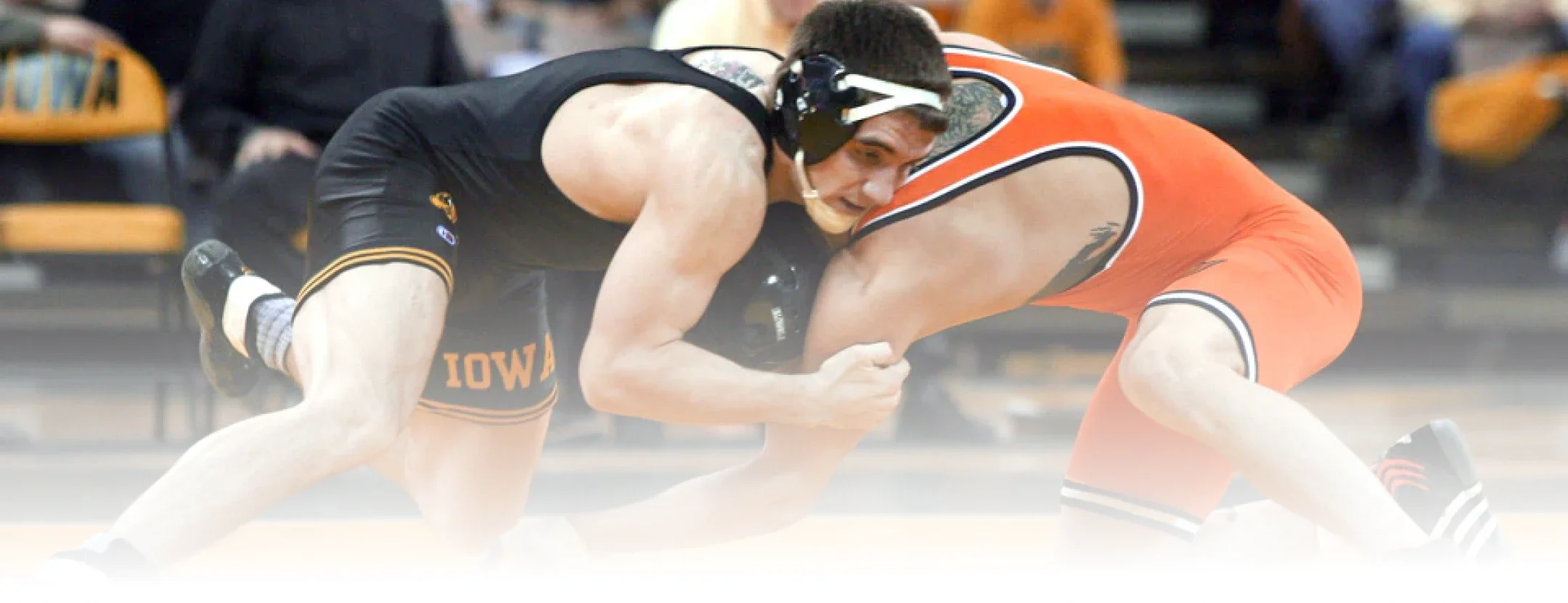
How We Rebuilt a Youth Wrestling App Into a Real-Time Training Partner for 10,000+ Kids
Stance & Motion's Youth Training Rebuild
Stance & Motion had 10,000 young wrestlers relying on it and an engine that could not keep up. Cues arrived 200 to 400 milliseconds late, older phones stuttered, and coaches had no view of who trained. We rebuilt the cue pipeline, added a coach dashboard, stabilized older devices, and redesigned the first week. Cues now fire 7 times faster, consistency is up 32%, stability up 44%. The old lag taught the wrong timing. The rebuild corrects it in motion.
The Impact
An App With the Users but Not the Engine to Match
Stance & Motion is a US-based wrestling and kids’ self-defense platform that helps young athletes train through customizable workouts, real-time on-mat commands, and a coach-ready team dashboard. It supports more than 10,000 youth wrestlers across clubs, schools, and training academies, from complete first-timers learning a basic stance to seasoned young competitors drilling their technique.
They weren’t looking to add more features to what they already had. The core experience, the real-time coaching a young wrestler needs mid-drill, simply wasn’t fast or stable enough to trust. They wanted that part rebuilt properly.
The Experience Broke Exactly Where Training Happens
A wrestling training app lives or dies on timing. A cue to correct a stance is useful in the half-second the athlete is still in it, and useless a moment later. Stance & Motion’s previous build carried 200 to 400 milliseconds of delay on its cues, enough to fall out of rhythm with the motion it was supposed to be guiding. For a young athlete drilling technique, that lag doesn’t just annoy. It teaches the wrong timing.
The first week was where users quietly disappeared. Youth apps lose close to half their users inside the first seven days, and Stance & Motion was no exception. The opening experience wasn’t sticky enough to carry a young kid past the drop-off window and into a real training habit.
Coaches were flying blind. Clubs wanted to see who was practicing and how much, but there was no dashboard and no structured metrics to show it. And roughly 40% of young users opened the app on older iOS and Android devices, where performance was inconsistent enough to make the whole thing feel unreliable. Each of these hit a different person in the same system and compounded into a product that couldn’t build its daily habit.


We Rebuilt It to Behave Like a Wrestling Assistant
We set aside the idea that this was an app with a lag problem to patch. It was a training tool that needed to feel like a coach standing right next to the athlete: fast, structured, aware of each kid. That framing set the priorities.
We worked through the four people the app actually serves with the Stance & Motion team: the athlete mid-drill, the beginner in week one, the coach watching a club, the kid on an older device. Each had a specific failure to reverse, and each became a pillar of the rebuild.
Real-Time Performance Cues
We re-engineered the cue system so commands fire fast enough to correct a stance while the athlete is still in it. The 200 to 400 millisecond delay that pulled kids out of rhythm is gone.
Coach-Ready Team Dashboard
We built the dashboard clubs had been asking for, giving coaches a structured view of who's training and how much. Practice time and athlete usage that used to be invisible are now something a coach can act on.
Cross-Platform Stability
We rebuilt for consistent performance across iOS and Android, including the older devices 40% of young users rely on. The app behaves the same whether a kid opens it on a new phone or a hand-me-down.
Engaging Youth-Friendly UX
We redesigned the first-run experience around the seven-day window where youth apps lose most users, and added three specialized training modes built specifically to keep young kids coming back.
One App Rebuilt Across Every Training Moment
Speed Was the Foundation
Real-time cue performance was engineered as core infrastructure from day one. The entire pipeline was built around latency, because a training app that lags is teaching the wrong timing, and that is not something you fix with an optimization pass at the end.
We built native across both platforms, Kotlin on Android and Swift on iOS. For an app where 40% of users are on older hardware, native gave us the control to keep it stable where a shared layer would have stuttered.
Throughout the six-month build, we kept the Stance & Motion coaches close to the work at every stage. A tool meant to stand in for a coach only works if coaches shape what it does.
Fast Cues. Stable App. Coaches Who Can Finally See.
The rebuilt app now serves more than 10,000 young wrestlers with cues that fire 7 times faster than the previous build, training consistency up 32%, and cross-platform stability improved 44%. The athlete on the mat, the beginner in week one, and the kid on an older phone all get an app that keeps up with them.
Three specialized training modes give young athletes more reasons to keep showing up, and coaches finally have a dashboard that shows who’s putting in the work. More athletes, more clubs, and new training modes extend the same foundation. The engine was built to carry them.
Testimonials
"We needed advanced tracking, clean UX, and smooth video performance. AppVerticals delivered an app that coaches and athletes use daily with zero friction. The stability and accuracy are miles ahead of our previous builds."

Speed and stability decide whether people keep using an app.
We engineer for exactly that.
Start the conversation