- AI verticals
Intelligence built into your products and operations. Consulting, custom models, agents, and copilots designed around how your business actually runs.

The AI-native system behind every project.
Get AI ConsultationAI Services
Generative AI Services
Machine Learning Services
Company
About AppVerticalsWe're a future-focused tech partner working with some of the world's top startups & enterprises.

AppVerticals Named to Inc. 5000 as One of America’s Fastest-Growing Companies Read More
Company
Resources
- Industries
Comprehensive App & Software Development across 20+ industries
Awards & Recognitions

 All IndustriesTrusted and Recognized by


Case Studies
From fast-moving startups to Fortune 500 enterprises.
A future-focused tech partner building, shipping, and scaling products for some of the world's most demanding companies.
View All Case Studies













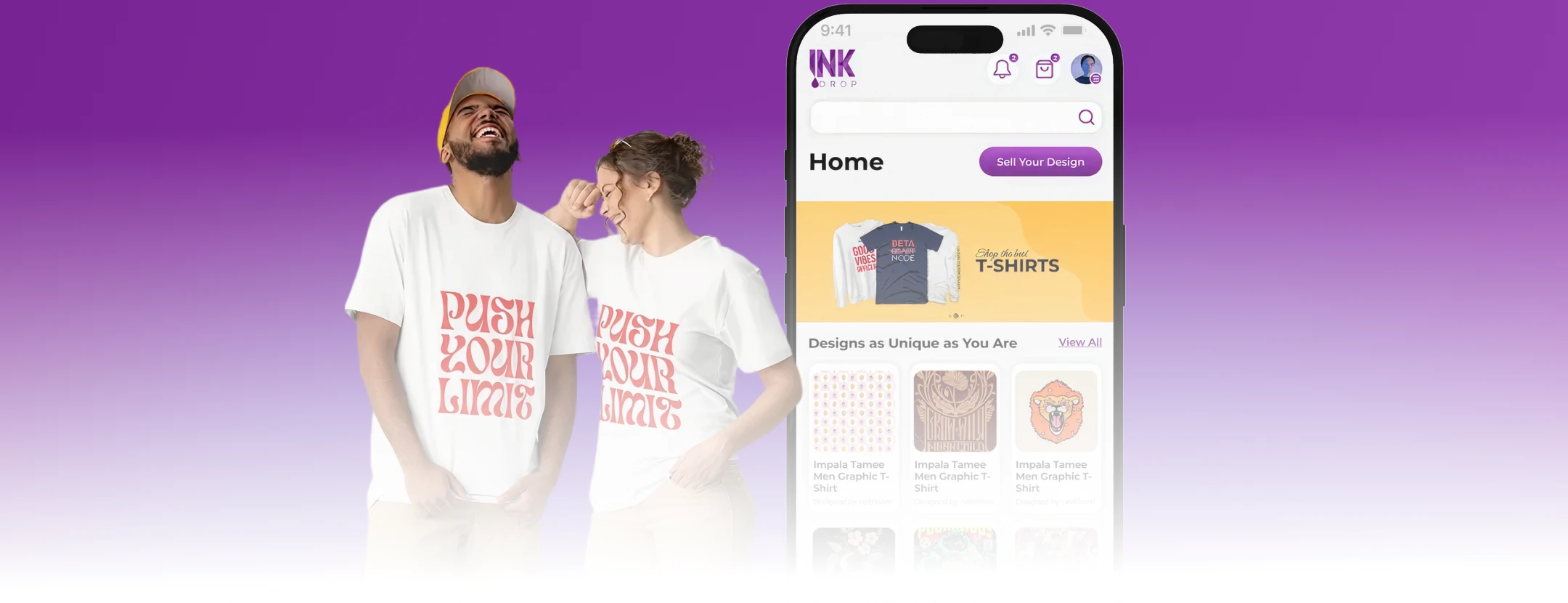
How We Built a Design-to-Commerce App That Powers 40,000+ Creator Apparel Designs
InkDrop's Design-to-Commerce Platform
InkDrop’s creators were designing in one tool, building stores in another, and taking payment through a third, with nothing connected and every handoff losing sales. We built one pipeline: a design studio refreshing in under 80 milliseconds, exact rendering from canvas to shirt, scalable creator storefronts, and PCI compliant checkout failing on just 0.61% of transactions. Over 40,000 designs and 12,000 storefronts now run through it. Blank canvas to paid order, one app.
The Impact
A Creator Platform Where Design and Selling Had to Be One Thing
InkDrop is a US-based custom apparel platform that lets creators design, publish, and sell their own shirts. It carries the full path from idea to income: a design studio for building artwork, a storefront for publishing it, and checkout for selling it. Today it powers more than 40,000 unique designs and 12,000-plus active storefronts, processing over 1,800 orders a month.
They wanted the whole creator journey, from a blank canvas through to a paid order, in a single platform that felt fast enough for real design work.
Design Had to Feel Instant and Checkout Had to Never Fail
A design-to-commerce app is two hard problems wearing one interface. The design side has to render layers, fonts, and color profiles instantly across both iOS and Android, because a canvas that lags turns creative work into a chore and creators simply stop using it. The commerce side has to take money reliably and securely every time. Getting either one wrong breaks the platform, and the two pull in different engineering directions.
Rendering was the first wall. Advanced customizations, rotation, layering, typography, gradients, all had to feel instant and render identically on every device. A design that looked one way on the canvas and another on the shirt would destroy the trust the whole platform depends on.
Payments were the second, with no room for error. Multi-step checkout flows required strict PCI-compliant integration, because a creator platform handling thousands of orders can’t afford a checkout that drops transactions. And every creator needed their own business: storefronts had to scale so each creator could run their own product pages, shipping settings, and analytics across thousands of independent stores on one platform.


We Built the Design and Commerce Halves as One Pipeline
We started from the creator’s actual path. Designing, publishing, and selling are one move from idea to income, and the platform had to feel that way even though the halves are engineered differently.
We worked through that whole path with the InkDrop team: what a creator needs to design without lag, publish a storefront that’s really theirs, and sell through checkout that never drops a sale. Rendering speed and payment reliability were first-order requirements from the start.
Design Studio & Real-Time Editing
We built a design studio with drag-and-drop graphics and real-time editing, so rotation, layering, typography, and gradients feel instant. The canvas refreshes in under 80 milliseconds, keeping creative work fluid.
Scalable Creator Storefronts
We built a storefront system where each creator runs their own product pages, shipping settings, and analytics dashboard. It scales to thousands of independent stores on one platform, so a creator gets a real business.
Secure, Reliable Checkout
We built a multi-step checkout on strict PCI-compliant payment integration, tuned so transactions almost never fail. At a 0.61% checkout failure rate, the payment step that decides whether a sale completes is fast and dependable for creators and buyers alike.
1:1 Rendering Accuracy
We built the rendering pipeline for exact fidelity, so fonts, colors, and layered graphics look the same on the finished shirt as they did on the canvas, across both iOS and Android.
One App From Blank Canvas to Paid Order
Rendering and Payments, Both Engineered First
The canvas pipeline was engineered around a sub-80-millisecond refresh from the start, because in a design tool any lag turns creative flow into friction and creators walk away. Building for that speed up front is what let advanced edits like layering and gradients feel instant.
We built payments on strict PCI-compliant integration and held checkout to a 0.61% failure rate, treating transaction reliability as non-negotiable. For a platform processing thousands of orders across thousands of stores, a checkout that drops sales would have undercut every creator on it.
We validated hard before launch, testing across 120 design scenarios, 3,200 rendering cycles, and 6,500 storefront interactions so the app went live at a 99.94% crash-free rate.
One App. Design, Publish, Sell. Fast and Reliable.
InkDrop now powers more than 40,000 unique designs across 12,000-plus active storefronts, processing over 1,800 orders a month. Creators design, publish, and sell from one app, with a canvas that refreshes in under 80 milliseconds and a checkout that fails on only 0.61% of transactions.
Design creation is 32% faster, first-session purchases rose 31%, new signups grew 27%, and active designers stay 3.6 times longer. The old split between designing somewhere and selling somewhere else is gone. More designs, more storefronts, and more orders run on the same foundation from here.
Testimonials
"We were hitting a wall with scale, especially on that mobile rendering speed and secure checkout. AppVerticals engineered a strong fix that got our storefront squared away and running fast. If your business needs serious, reliable tech built, stop messing around and call these folks."

When speed and reliable payments decide whether creators stay, the engineering has to come first. That is how we build.
Start the conversation